
Nashik
08048068814
about-cover-bg image
About Advanced ENT Surgical Care for Patients

Specialised ENT & Head and Neck Surgical Care

Surgeries
Featured Surgeries

What We Cure

Endoscopic Tympanoplasty Surgery

Endoscopic Tympanoplasty Surgery Endoscopic tympanoplasty is a surgical procedure used to repair a perforated or damaged eardrum. The eardrum plays an important role in hearing and helps protect the middle ear from external contaminants. At Omkar ENT Hospital, patients with eardrum perforations can undergo specialist evaluation to determine whether surgical repair may be appropriate. When May Tympanoplasty Be Recommended? Tympanoplasty may be considered for patients with: A persistent perforation of the eardrum Hearing difficulties associated with eardrum damage Recurrent ear discharge related to a perforation An eardrum injury or damage following an ear infection How Is the Procedure Performed? The surgeon uses an endoscope, a thin instrument with a camera and light, to examine the ear and perform the repair. A graft is generally used to close the perforation. The exact technique depends on the size and location of the perforation and the condition of the middle ear. What Are the Potential Benefits? The procedure aims to close the eardrum perforation, reduce recurrent ear discharge in suitable cases and potentially improve hearing. Results vary depending on the patient's ear condition and other factors. Recovery and Follow-up Patients receive instructions about ear care, keeping the ear dry, medication and follow-up examinations. Hearing improvement may take time and is assessed after healing. Treatment location: Omkar ENT Hospital, Nashik, Maharashtra. Patients travelling from Surat should arrange a consultation and follow-up plan before travel.

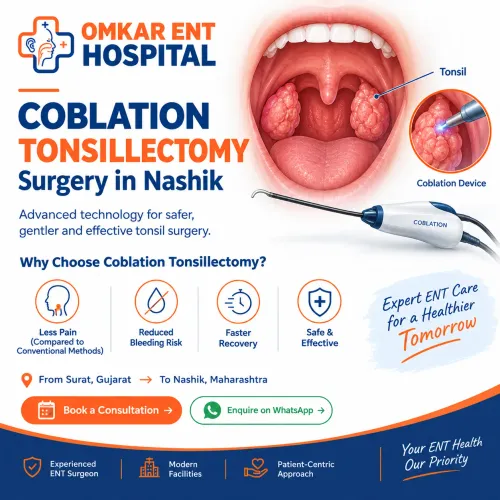
Coblation Tonsillectomy

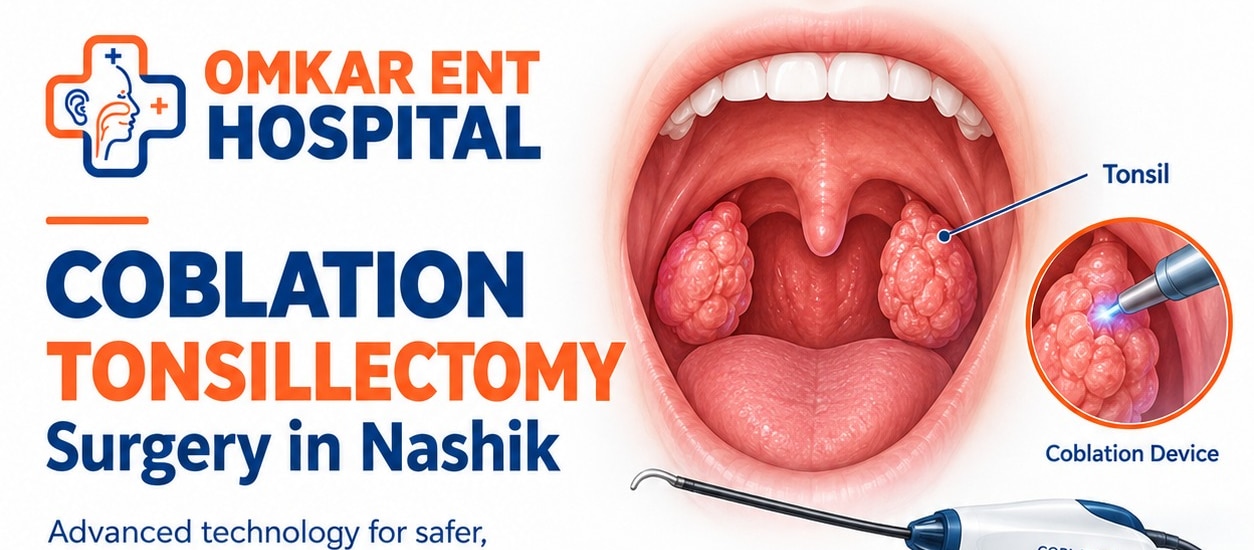
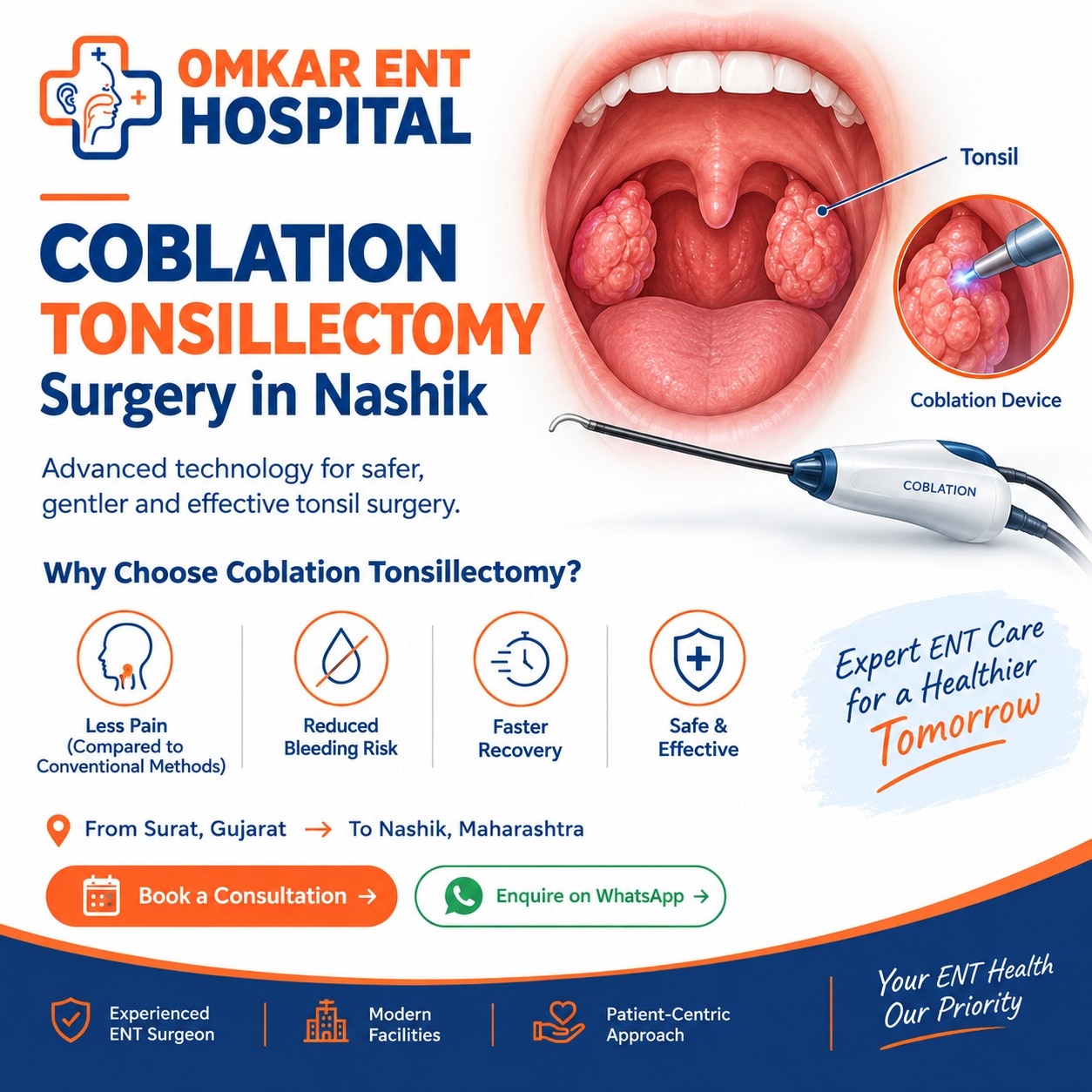
Coblation Tonsillectomy Coblation tonsillectomy is a surgical procedure to remove the tonsils using a specialised device that employs radiofrequency energy in a saline medium. The technique is used by appropriately trained surgeons for selected patients who require tonsil removal. The tonsils are two masses of tissue located at the back of the throat. Although they contribute to immune function, repeated infections or enlarged tonsils can sometimes cause significant problems. When May Tonsillectomy Be Recommended? A surgeon may consider tonsillectomy for: Recurrent or severe tonsil infections Enlarged tonsils contributing to sleep-related breathing problems Selected tonsil-related complications Other specific conditions assessed by an ENT specialist Understanding Coblation Technology The coblation device works in a controlled saline environment to break down tissue. Its suitability depends on the patient's condition, the surgeon's experience and the clinical circumstances. Potential Benefits For appropriately selected patients, surgery may reduce the burden of recurrent tonsillitis or improve breathing when enlarged tonsils are responsible for obstruction. Outcomes vary, and no technique eliminates all surgical risks. Recovery After Surgery Throat pain and discomfort while swallowing are common during recovery. Patients need adequate hydration, appropriate pain relief, dietary guidance and clear instructions about warning signs. Bleeding after tonsillectomy requires urgent medical assessment. Consultation: Patients from Surat can enquire about an ENT assessment and surgical planning at Omkar ENT Hospital, Nashik.

Coblation Adenoidectomy

Coblation Adenoidectomy Adenoidectomy is a surgical procedure to remove enlarged or problematic adenoid tissue located behind the nose, in the upper part of the throat. Coblation technology may be used to remove the tissue in suitable cases. Adenoids are part of the body's immune system. However, when they become enlarged or repeatedly inflamed, they can contribute to nasal obstruction, sleep-related breathing difficulties and certain ear problems. When May Adenoidectomy Be Recommended? An ENT specialist may consider the procedure when a patient has: Persistent nasal blockage related to enlarged adenoids Snoring or sleep-related breathing difficulties Recurrent middle-ear problems or fluid behind the eardrum in selected cases Other symptoms that persist despite appropriate non-surgical treatment How Is the Procedure Performed? The surgeon evaluates the adenoids and surrounding anatomy before deciding on the appropriate approach. The procedure is generally performed under anaesthesia, with the removal technique selected according to the patient's needs. Potential Benefits In appropriately selected patients, removing problematic adenoid tissue may improve nasal airflow, sleep quality or certain ear-related symptoms. Recovery and Aftercare Recovery instructions may include hydration, dietary guidance, pain management and monitoring for bleeding, fever or breathing difficulties. The expected recovery varies by patient. For families from Surat: Arrange an ENT consultation in Nashik to understand whether adenoid surgery is appropriate for your child.

Image Gallery

Pictures That Speak

Need Trusted Second Opinion?

Not sure about your diagnosis or treatment plan? We're here to help.

Testimonials View All
testimonial image

We had a very good experience with Dr. Mukesh More. My daughter received excellent care and the doctor was very kind and...

Read More

testimonial image

Dr. Mukesh More is a skilled ENT specialist with a patient-focused approach. The clinic has supportive staff and well-or...

Read More

testimonial image

Best ENT Hospital in Nashik. I done my EAR operation. I like all service Consultation Reception staff Nursing Staff CLEA...

Read More

footerhc